Monday, March 24, 2025

Mental Health and Workers’ Compensation in Pennsylvania: Understanding Your Options

In today’s fast-paced world, the demands of the workplace can take a toll on our mental health. Whether you’re dealing with job-related stress, workplace harassment, or a traumatic event on the job, it’s essential to understand that your mental well-being matters. Workers’ compensation in Pennsylvania recognizes this and provides avenues for employees who suffer from work-related mental health issues to seek relief and support. However, understanding the available options and successfully claiming benefits for such conditions can pose significant challenges.

At Luxenberg Garbett Kelly & George P.C., our team of Western Pennsylvania workers’ compensation lawyers can help workers explore their options when it comes to mental health and workers’ compensation. We are committed to advocating for the rights and well-being of those struggling with mental health concerns stemming from workplace conditions. Our lawyers can also provide legal assistance in other relevant matters, such as cases involving partial disabilities or workplace hearing loss. Contact us today at (724) 658-8535 to schedule a consultation and discuss how we can assist you in securing the benefits you deserve.

The Importance of Mental Health in the Workplace

Mental health is an integral part of overall well-being and plays a significant role in our ability to function effectively in the workplace. Unfortunately, mental health issues can arise as a result of work-related stress, harassment, or even accidents. These issues can impact job performance, personal relationships, and overall quality of life. Recognizing the importance of mental health in the workplace is the first step towards creating a healthier work environment.

Understanding Workers’ Compensation

Workers’ compensation is a system designed to provide financial support to employees who suffer from work-related injuries or illnesses. In Pennsylvania, this program is administered by the Pennsylvania Department of Labor & Industry. While most people associate workers’ compensation with physical injuries, it’s crucial to know that mental health issues can also be covered under this program.

Mental Health Conditions Covered by Workers’ Compensation

Workers’ compensation in Pennsylvania can cover mental health conditions when they are directly related to work-related incidents. Some of the mental health conditions that may be covered include:

  • Post-Traumatic Stress Disorder (PTSD): If you experience a traumatic event in the workplace, such as a robbery or a serious accident, and develop PTSD as a result, you may be eligible for workers’ compensation benefits.
  • Depression and Anxiety: Severe stress, harassment, or bullying at work can lead to depression and anxiety. If you can demonstrate that your mental health condition is a direct result of your work environment, you may be eligible for compensation.
  • Occupational Stress: High-stress jobs, such as those in the healthcare industry or emergency services, can lead to occupational stress. Workers’ compensation may cover treatment for this condition.
Mental Health Condition Cause Workers’ Compensation Eligibility
Post-Traumatic Stress Disorder (PTSD) Traumatic workplace events (e.g., robbery, serious accident) Covered if directly linked to a workplace incident
Depression and Anxiety Workplace stress, harassment, or bullying Eligible if proven to be caused by work conditions
Occupational Stress High-stress jobs (e.g., healthcare, emergency services) May be covered if work-related stress is significant

Eligibility Requirements for Mental Health Workers’ Compensation Claims in Pennsylvania

In Pennsylvania, workers’ compensation for mental health issues is available under specific conditions. The state acknowledges three primary types of psychological injuries eligible for workers’ comp benefits: Physical/Mental, Mental/Physical, and Mental/Mental. Understanding these categories and their eligibility criteria is crucial for employees seeking compensation.

Physical/Mental Claims

These occur when a work-related physical injury leads to a psychological condition. For instance, an employee who suffers severe injuries from a workplace accident and subsequently develops depression qualifies for this claim. The key requirement here is that the psychological issue must stem from a physical injury that is significant enough to necessitate medical treatment.

Mental/Physical Claims

This category addresses cases where psychological stress at work results in a physical ailment. Examples include stress-induced heart attacks or ulcers. Proving these claims is challenging, as it requires demonstrating:

  • The direct causation between workplace psychological stress and the physical injury,
  • The persistence of the physical injury, even after the removal of the stressor,
  • A resultant disability or loss of earning capacity is primarily due to the physical condition, not the psychological stress.

Mental/Physical claims often benefit from medical testimony to link the physical symptoms to workplace stress instead of external factors or pre-existing health issues.

Mental/Mental Claims

Reserved for those who suffer psychological injuries due solely to workplace conditions, without a preceding physical injury. Eligibility hinges on proving that the injury resulted from an “abnormal working condition.” This might involve a single traumatic event or prolonged exposure to harmful conditions, such as ongoing harassment. Moreover, the circumstances must be distinctly severe and unusual.

For all types, documentation from a mental health professional and evidence linking the condition to the workplace are essential. Being knowledgeable on these criteria helps workers determine if their situation may qualify for compensation and prepares them for the claims process.

Steps to Take if You’re Suffering from Work-Related Mental Health Issues

  • Seek Medical Attention: If you’re experiencing mental health issues related to your job, it’s essential to seek medical attention. A healthcare professional can diagnose your condition and provide the necessary treatment.
  • Report the Incident: It’s crucial to report the incident that led to your mental health issues to your employer as soon as possible. Document the incident and any subsequent conversations or actions related to your condition.
  • Consult an Attorney: Workers’ compensation claims can be complex, and mental health claims are no exception. Consulting an experienced attorney, such as those at Luxenberg Garbett Kelly & George P.C., can assist in handling the legal process and pursuing compensation.

Challenges in Proving Mental Health Claims

Proving a mental health claim for workers’ compensation can be challenging, as these conditions are often less visible than physical injuries. Employers and insurance companies may dispute such claims, making it even more critical to have an experienced attorney. Our team at Luxenberg Garbett Kelly & George P.C. is well-versed in handling mental health-related workers’ compensation cases and can provide the necessary support and legal guidance.

Mental health issues are a genuine concern in the workplace, and they can have a profound impact on an individual’s life. Recognizing the importance of mental health and understanding your options for workers’ compensation in Pennsylvania is crucial. At Luxenberg Garbett Kelly & George P.C., our Western Pennsylvania workers’ compensation lawyers are dedicated to helping individuals manage the complex process of filing and securing workers’ compensation benefits for mental health conditions. If you or a loved one is struggling with a work-related mental health issue, we can advocate for your rights and help ensure you receive the support and compensation you need to move forward with your life.

Your mental health is important, and we’re here to help you protect it. Contact us today at (724) 658-8535 to schedule a consultation.


from LGKG https://www.lgkg.com/mental-health-and-workers-compensation-in-pennsylvania/

Thursday, March 20, 2025

Navigating the Social Security Disability Application Process: A Comprehensive Guide

The Social Security Disability application process can be daunting and complex, leaving many applicants overwhelmed by the intricate requirements and lengthy procedures. This comprehensive guide is designed to simplify the journey, providing step-by-step insights and essential tips to enhance your chances of approval. From understanding the eligibility criteria to preparing for the potential appeals process, this guide offers invaluable resources to help you manage every aspect of your application with confidence and clarity.

If you find yourself facing challenges or uncertainties with your Social Security Disability application, the experienced Western Pennsylvania personal injury lawyers at Luxenberg Garbett Kelly & George P.C. are here to assist. We bring a personalized approach to each case, ensuring that your rights are vigorously represented and your needs are met with the utmost care and professionalism. Our team can help you through the challenges of the Social Security system. Contact us at (724) 658-8535 to learn how we can support your application process for the results you deserve.

Understanding Social Security Disability

Social Security Disability (SSD) is a federal program designed to provide financial assistance to individuals who are unable to work due to a disability. To qualify for SSD benefits, you must meet certain eligibility criteria, including having a medical condition that is expected to last at least one year or result in death.

Step 1: Assessing Eligibility: Before diving into the application process, it’s crucial to determine if you meet the eligibility criteria. This involves reviewing the Social Security Administration’s (SSA) guidelines and understanding the specific requirements for disability benefits.

Step 2: Gathering Documentation: The success of your SSD application hinges on the documentation you provide. Collecting comprehensive medical records, employment history, and other supporting documents is essential. This may include medical reports, test results, treatment plans, and statements from healthcare professionals.

Step 3: Completing the Application: The SSA provides two main methods for applying for SSD benefits: an online application through their website or an in-person visit to a local Social Security office. Whichever method you choose, ensure that you complete the application accurately and thoroughly, providing detailed information about your medical condition and how it impacts your ability to work.

Step 4: Navigating the Appeals Process: It’s not uncommon for initial SSD applications to be denied. If this happens, don’t lose hope. The appeals process allows you to present additional evidence and make your case before an administrative law judge. Understanding the different levels of appeal, from reconsideration to a hearing, is crucial in continuing your pursuit of benefits.

Step 5: Seeking Professional Assistance: Given the complexity of the SSD application process, many applicants find it beneficial to seek the help of legal professionals or advocates specializing in disability law. These experts can guide you through the process, ensuring that your application is strong, and may significantly increase your chances of success.

The Social Security Disability application process can be daunting, but with careful preparation, a thorough understanding of the requirements, and professional assistance, you can manage it successfully. Remember, persistence is key, and don’t be discouraged if you face setbacks along the way. Staying informed and proactive increases your chances of receiving the support you need.

Step Key Considerations
Step 1: Assessing Eligibility Medical condition must last at least one year or result in death.
Step 2: Gathering Documentation Include test results, treatment plans, and statements from healthcare professionals.
Step 3: Completing the Application Ensure accuracy and provide detailed information about your condition.
Step 4: Navigating the Appeals Process Understand reconsideration, hearings, and additional evidence submission.
Step 5: Seeking Professional Assistance Experts can strengthen your application and improve chances of approval.

How Long Does It Take to Get Social Security Disability Benefits?

When applying for Social Security Disability Benefits in Pennsylvania, it is essential to understand the expected timeline and the steps involved in the process. After submitting your application, the Social Security Administration (SSA) usually takes about three to five months to make an initial decision. This period allows the SSA to thoroughly review your claim and conduct any necessary interviews to clarify your medical condition and eligibility.

If your claim is approved, do not expect to start receiving benefits immediately. Pennsylvania imposes a mandatory five-month waiting period from the approval date of your disability claim. This waiting period is designed to confirm the long-term nature of your disability. Therefore, payments will not begin until the sixth month after your disability has been officially recognized by the SSA.

Given these timelines, it is advisable to apply for benefits as soon as a disabling condition is diagnosed to avoid delays in receiving assistance. Applications can be submitted online or via a scheduled phone consultation with Social Security. Being proactive in managing your application and responding to any requests from the SSA can help smooth the process and potentially reduce delays in receiving your disability benefits.

Get Experienced Legal Help from Luxenberg Garbett Kelly & George P.C.

Successfully managing the Social Security Disability application process can be a pivotal turning point in securing the financial support you need. Understanding the details of each step requires not only patience but also a strategic approach to effectively manage the documentation and deadlines involved. Remember, the journey to approval is often challenging and filled with regulatory obstacles that are best handled with professional guidance.

If you’re in Western Pennsylvania and looking for assistance with your Social Security Disability application, reach out to Luxenberg Garbett Kelly & George P.C. Our seasoned Western Pennsylvania personal injury lawyers understand the detailed aspects of the SSD process and are committed to providing personalized legal assistance tailored to your unique situation. We can help secure the benefits you deserve. Contact us today at (724) 658-8535 to schedule a consultation and take the first step toward a successful application.


from LGKG https://www.lgkg.com/social-security-disability-application-process/

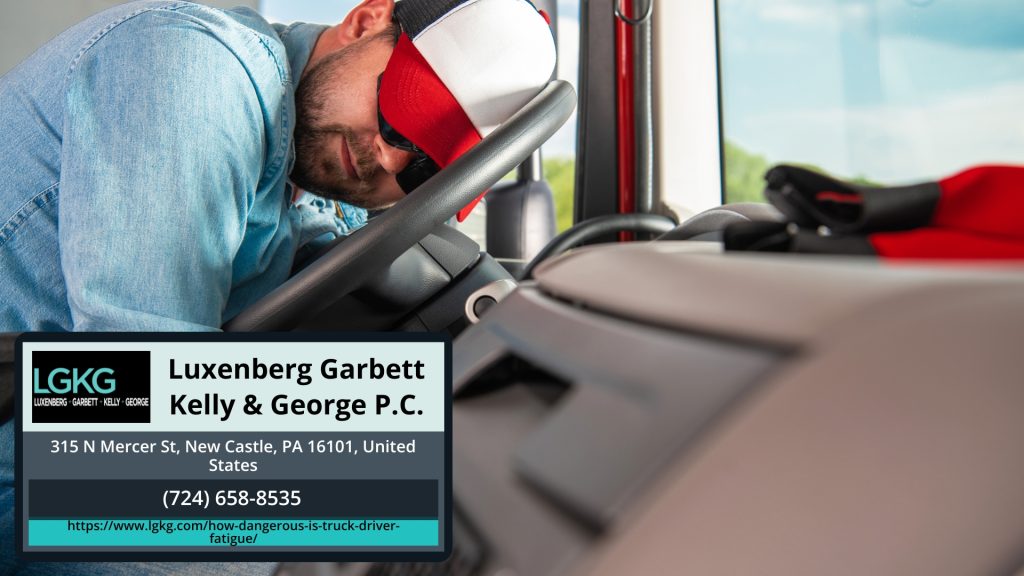
How Dangerous Is Truck Driver Fatigue?

Large trucks are among the most dangerous vehicles on the road. Truck drivers must obtain a special license that requires additional training for a good reason.

When a truck driver is too tired to drive, it can create a seriously hazardous situation. However, due to the nature of the industry, many drivers feel they must continue on or they risk losing their job or facing punishment for not meeting deadlines. For others on the roads, a sleepy truck driver poses a serious safety risk for multiple reasons. If you have a question about truck accidents and how fatigue may contribute to dangerous situations, it is important to understand your legal options.

If you or a loved one has been injured in a truck accident caused by driver fatigue, you deserve strong legal representation. At Luxenberg Garbett Kelly & George, P.C., our experienced Western Pennsylvania truck accident lawyers can help fight for the compensation you need to recover from medical bills, lost wages, and the pain this accident has caused. We are dedicated to holding negligent drivers accountable and ensuring that a negligent truck company is held responsible when its policies or practices create unsafe conditions. Contact us today at (724) 658-8535 for a free consultation and learn how we can assist you in seeking justice and financial recovery.

How Fatigue Slows a Truck Driver’s Reflexes

Fatigue significantly slows a truck driver’s reflexes, increasing the risk of serious accidents. This means the driver may not react as quickly as usual, which is a serious issue in a big truck. Large trucks already require more stopping time than passenger vehicles, and even a brief delay in reaction can lead to devastating rear-end collisions and multi-vehicle crashes. When fatigued, a driver may fail to brake in time to avoid hazards, making accidents more likely and severe.

The Impact of Fatigue on a Truck Driver’s Focus

A truck driver who is unable to properly focus on driving will pose a huge risk to others on the road. Trucks are already dangerous due to their sheer size and weight. If that truck suddenly comes into your lane and clips your car, it can send you careening out of control. It is a serious issue when a truck driver is too tired to pay attention and focus on driving.

Drowsy driving affects situational awareness, making it harder for truck drivers to anticipate and respond to changes in traffic. A fatigued driver may drift out of their lane, misjudge distances, or fail to notice slowing vehicles ahead. If a distracted or unfocused truck driver veers into another lane, it could lead to a serious crash, potentially pushing a smaller vehicle off the road.

Why Fatigue Leads to Slower Reaction Times

A drowsy driver not only has slower reflexes but also experiences cognitive delays, making it harder to make a fast decision to react to things happening on the road. This can lead to crashes very easily. This means the driver may struggle to assess hazards, brake in time, or make quick lane adjustments, all of which increase the risk of a crash.

A tired truck driver is a danger to everyone. No driver should be pressured to operate a vehicle when exhausted, as it endangers not only them but also other motorists.

Risk Factor Description
Decrease of Reflexes Fatigue slows a driver’s reflexes, increasing the likelihood of accidents, especially in large trucks.
Reduction of Focus Tired truck drivers struggle to pay attention, making it easier to lose control of their vehicles.
Slow Reaction Time Fatigue causes cognitive delays, making it difficult for drivers to react quickly to road conditions.

Truck Driver Fatigue Prevention Laws and Regulations

Truck driver fatigue is a serious safety risk, contributing to many accidents each year. To address this issue, federal and state regulations set strict limits on driving hours and require mandatory rest periods. The Federal Motor Carrier Safety Administration (FMCSA) enforces Hours of Service (HOS) regulations to reduce fatigue-related crashes.

Truck drivers transporting goods may drive up to 11 hours per shift, but only after 10 consecutive hours off duty. Their total on-duty time, which includes tasks like loading and inspections, cannot exceed 14 hours in a single shift. After eight hours of driving, a 30-minute break is required to help prevent drowsiness.

Weekly driving limits restrict truckers to 60 hours over seven days or 70 hours over eight days. To restart a new workweek, they must take at least 34 consecutive hours off duty. These rules are designed to prevent the cumulative fatigue that can build up from extended work periods.

To enforce compliance, Electronic Logging Devices (ELDs) are mandatory for most commercial trucks. ELDs automatically track driving time and duty status, eliminating the risk of falsified logbooks. Pennsylvania enforces HOS regulations under 67 Pa. Code § 229, ensuring that commercial vehicles adhere to these federal limits.

Enforcement agencies conduct roadside inspections, ELD audits, and compliance reviews to verify adherence. Violations can lead to fines, out-of-service orders, and employer liability in truck accident cases. These regulations play a critical role in keeping roads safer, particularly in Western Pennsylvania, where trucking is essential to the economy.

Understanding and following these regulations is crucial for all truck drivers to help maintain road safety and prevent fatigue-related incidents. If you’ve been involved in a trucking accident, a Western Pennsylvania truck accident lawyer can help you navigate your legal options and seek fair compensation. Contact Luxenberg Garbett Kelly & George, P.C. today at (724) 658-8535 for a free consultation.


from LGKG https://www.lgkg.com/how-dangerous-is-truck-driver-fatigue/

Workplace Hearing Loss in Pennsylvania

If you work in the construction or automotive industries, or in any other field where loud noises are commonplace, you should know that your profession places you at risk of suffering from what has now become one of America’s most common workplace injuries: hearing loss.

According to California Healthline, about 22 million American workers face exposure to occupational noise levels that can cause ear problems, accounting for about $242 million in workers’ compensation costs nationally each year. Just how high your risk of suffering work-related hearing loss is varies based on factors such as the extent of your exposure and the industry you work in.

At Luxenberg Garbett Kelly & George P.C., our experienced Western Pennsylvania workers’ compensation lawyers are dedicated to supporting workers who have suffered hearing loss on the job. We can offer guidance through the workers’ compensation process to secure the necessary benefits for medical treatment and potential wage loss. If you are dealing with workplace hearing loss, our team can help you understand your legal options and work towards the compensation you need to manage your condition effectively. Contact us today at (724) 658-8535 to schedule a consultation.

Risk Factors for Work-Related Hearing Loss

In addition to the construction and automotive industries, you run a higher risk of suffering on-the-job hearing loss if you work in manufacturing or mining. Furthermore, contrary to what you might think, you are more likely to experience hearing loss if you work in an environment where noise levels are moderate rather than severe.

This is because workers in settings where loud noises are obvious and commonplace are more likely to take precautions against hearing loss, such as donning earplugs or headphones. Workers in settings where the noise level is more moderate, however, may not feel the same need to protect themselves. Additionally, their employers may feel less inclined to enact strong safety standards relating to hearing loss, despite the fact that risks still exist in moderately loud environments.

Common Types of Workplace Hearing Loss and Their Causes

Workplace hearing loss is a significant occupational health issue, particularly in industries where loud noise and hazardous substances are prevalent. This type of hearing damage can be broadly categorized into two types: sensorineural and conductive.

Sensorineural Hearing Loss

This form occurs when there is damage to the inner ear or the nerve pathways from the inner ear to the brain. It is most commonly caused by exposure to loud noises such as machinery, explosions, and power tools. This exposure can be sudden or accumulate over time, leading to a gradual decline in hearing. Industries such as construction, manufacturing, and oil and gas extraction see higher instances of sensorineural hearing loss due to the consistent noise levels in these environments.

Conductive Hearing Loss

This type involves damage to the outer or middle ear, which can block or reduce the transmission of sound from the outer ear to the inner ear. Causes of conductive hearing loss include the presence of foreign objects, ear infections, and exposure to certain chemicals that can alter the structure or function of ear components. Workers handling hazardous substances or those in environments where debris is common are more susceptible to this form of hearing loss.

Knowing these common types of workplace hearing loss and their causes is crucial for implementing effective preventative measures and helping ensure workers’ health and safety in noise-exposed or chemically hazardous environments.

Reducing Your Risk

Among the actions you can take to reduce your risk of occupational hearing loss is to don protective gear consistently, even when noise levels do not seem particularly severe. Your employer, too, has a duty to protect you against hearing loss as much as possible. This might involve making sure you are aware of any risks and educating you about how to take proper precautions to protect your ears while on the job.

Occupational hearing loss can impact the rest of your life, meaning you can suffer negative effects long after you leave your profession or retire. Prevention and protection are your best bet for staying safe and preserving your hearing.

Pursue Fair Compensation Today with the Help of Luxenberg Garbett Kelly & George P.C.

If you have experienced hearing loss due to your working conditions, it’s vital to understand your rights and the compensation you may be entitled to. At Luxenberg Garbett Kelly & George P.C., our team of Western Pennsylvania workers’ compensation lawyers is committed to helping clients secure the compensation they deserve for medical expenses, lost wages, and other related costs.

Hearing loss can significantly impact your ability to work and engage in everyday activities. Our lawyers have extensive experience in handling workers’ compensation claims related to workplace hearing loss and are here to assist you through the claim process. We provide personalized legal guidance, aiming to achieve the best possible outcome for your situation.

Contact Luxenberg Garbett Kelly & George P.C. today at (724) 658-8535 to schedule a consultation.

Aspect Description
Industry Type Higher risk in construction, automotive, manufacturing, and mining industries.
Noise Level Awareness Workers in moderate-noise environments may underestimate risks and take fewer precautions.
Employer Safety Standards Employers in moderate-noise settings may implement weaker safety measures.
Protective Measures Using earplugs or headphones consistently can help reduce the risk of hearing loss.
Long-Term Impact Occupational hearing loss can have lasting effects even after leaving the profession.


from LGKG https://www.lgkg.com/workplace-hearing-loss-pennsylvania/

Wednesday, February 26, 2025

Navigating Workers’ Compensation in Pennsylvania: Rights, Benefits, and Responsibilities

Workers’ compensation in Pennsylvania serves as a crucial safety net for employees who suffer work-related injuries or illnesses. This system helps cover medical expenses and lost wages, allowing injured workers to recover without the added burden of financial strain. It also provides a structured process for employers to handle workplace injuries while maintaining legal protections. Understanding the workers’ compensation process in Pennsylvania is essential for both employees and employers, as it affects workplace rights, responsibilities, and financial security.

Workers’ Compensation benefits can include coverage for medical expenses, wage loss compensation, vocational rehabilitation, and specific loss benefits for permanent injuries. However, navigating the claims process can be challenging, especially if an employer or insurance company disputes a claim. A knowledgeable Western Pennsylvania workers’ compensation lawyer can guide you through the claims process, protect your rights, and help you pursue the full benefits available under the law. If you need assistance with your claim, Luxenberg Garbett Kelly & George P.C. may be able to assist you. Contact us today at (724) 658-8535 for a free consultation and get the legal guidance you need to navigate your workers’ compensation case with confidence.

What is Workers’ Compensation?

Workers’ compensation is a form of insurance that provides wage replacement and medical benefits to employees who are injured or become ill as a result of their jobs. This includes injuries sustained in workplace accidents, occupational diseases, and repetitive stress injuries. In Pennsylvania, most employers are required by law to carry workers’ compensation insurance to protect their employees in the event of a workplace injury or illness.

Rights and Responsibilities of Employees

Workers who are injured on the job in Pennsylvania have specific rights and responsibilities when it comes to filing for workers’ compensation benefits:

  1. Report the Injury: Employees must report any work-related injury or illness to their employer as soon as possible. Failure to report the injury promptly could jeopardize the employee’s ability to receive benefits.
  2. Seek Medical Treatment: Employees have the right to seek medical treatment for their work-related injury or illness. In Pennsylvania, employers have the right to designate a list of healthcare providers that injured workers must see for treatment.
  3. File a Claim: If an employee is unable to work due to a work-related injury or illness, they have the right to file a workers’ compensation claim with the Pennsylvania Bureau of Workers’ Compensation. This claim must be filed within the statute of limitations, which is typically within 120 days of the injury or the date the injury was discovered.
  4. Receive Benefits: If a workers’ compensation claim is approved, injured employees are entitled to receive wage replacement benefits, medical expenses coverage, and, in some cases, vocational rehabilitation services.
  5. Return to Work: Injured employees may be required to undergo medical evaluations and participate in vocational rehabilitation programs to facilitate their return to work. Employers are also required to provide reasonable accommodations for employees with work-related disabilities.
Step Description
Report the Injury Notify your employer immediately about any work-related injury or illness.
Seek Medical Treatment Obtain necessary medical care from an employer-designated healthcare provider.
File a Claim Submit a workers’ compensation claim with the Pennsylvania Bureau of Workers’ Compensation within the statutory deadline.
Receive Benefits Once the claim is approved, receive wage replacement, medical expense coverage, and potentially vocational rehabilitation services.
Return to Work Undergo required medical evaluations and participate in rehabilitation or vocational programs, with accommodations as needed.

Responsibilities of Employers

Employers in Pennsylvania also have specific responsibilities under the workers’ compensation system:

  1. Provide Insurance: Employers are required to carry workers’ compensation insurance to cover their employees in case of a workplace injury or illness.
  2. Report Injuries: Employers must report any work-related injuries or illnesses to their workers’ compensation insurance carrier and the Pennsylvania Bureau of Workers’ Compensation within a specified timeframe.
  3. Provide Medical Treatment: Employers are responsible for providing injured employees with access to medical treatment for their work-related injuries or illnesses.
  4. Accommodate Injured Workers: Employers must make reasonable accommodations for injured employees to facilitate their return to work, including modified duties or job reassignments if necessary.

Exceptions and Limitations in Workers’ Compensation Claims

Pennsylvania workers’ compensation covers most work-related injuries and illnesses. This includes sudden accidents like broken bones, back injuries, and burns, as well as repetitive stress injuries such as carpal tunnel syndrome or tendonitis caused by routine job activities. Work-related illnesses are also covered, including chemical exposure illnesses, respiratory conditions, and skin disorders caused by hazardous materials. Occupational diseases specifically recognized under Pennsylvania law include asbestos-related illnesses, hearing loss due to prolonged noise exposure, and lung diseases linked to workplace contaminants.

However, it’s crucial to understand while workers’ compensation provides coverage for most work-related injuries and illnesses, there are specific exceptions and limitations that may affect an employee’s eligibility for benefits. 

Exceptions to Coverage

  • Self-Inflicted Injuries: Injuries that an employee intentionally causes themselves are not covered.
  • Injuries Due to Legal Violations: Injuries resulting from an employee’s violation of the law, including illegal drug use, may not be covered.
  • Intoxication: Injuries or deaths caused by intoxication may not be covered.
  • Non-Work-Related Injuries: Injuries that happen outside of work duties or during personal activities unrelated to employment are generally not covered.
  • Certain Employment Categories: Specific groups may be exempt from mandatory coverage under the Pennsylvania Workers’ Compensation Act, including:
    • Federal Employees: Covered under federal workers’ compensation laws.
    • Railroad Workers: Also covered under federal statutes.
    • Agricultural Workers: Those who work fewer than 30 days or earn less than $1,200 in a calendar year from one employer may be exempt.
    • Domestic Servants: Coverage is optional for employers.
    • Executive Officers: Certain executive officers of corporations may elect an exemption from the Act.

Limitations to Claims

  • Statute of Limitations: Employees must file a workers’ compensation claim within three years from the date of injury. Failure to do so can result in the forfeiture of benefits.
  • Notice Requirement: Injured workers are required to report their injury to their employer within 120 days of its occurrence. Delayed reporting can lead to denial of the claim.
  • Pre-Existing Conditions: While aggravation of pre-existing conditions due to work activities may be compensable, establishing the work-related exacerbation can be challenging and may limit benefits.
  • Mental Health Claims: Psychological injuries, such as stress or post-traumatic stress disorder (PTSD), are generally compensable only if they are linked to a specific work-related incident.
  • ‘Coming and Going’ Rule: Injuries sustained while commuting to and from the workplace are typically not covered unless the employee was performing a work-related task during the commute.
  • Violation of Workplace Safety Rules: If an employee is injured while violating company safety policies or engaging in horseplay, their claim may be denied or benefits reduced.

Exclusive Remedy Provision

Under Pennsylvania law, workers’ compensation is generally the exclusive remedy for employees injured on the job, meaning they cannot sue their employers for additional damages related to the injury. However, exceptions exist, such as cases involving intentional harm by the employer or situations where the employer lacks required workers’ compensation insurance.

This legal framework is designed to provide a straightforward and efficient means of support for injured workers, while also protecting employers from potential lawsuits. Understanding these boundaries can help both employees and employers manage expectations and responsibilities regarding workplace safety and compensation.

Navigating the Workers’ Compensation System

Navigating the workers’ compensation system in Pennsylvania can be overwhelming, with numerous regulations and requirements to consider. For employees, understanding their rights and responsibilities is essential for ensuring they receive the benefits they are entitled to. Likewise, employers must fulfill their obligations under the law to protect their employees and maintain compliance with workers’ compensation regulations.

Seeking guidance from a Western Pennsylvania workers’ compensation lawyer can help employees and employers address challenges in the claims process and understand their rights and responsibilities. Workers’ compensation laws provide important protections, but disputes and denials may arise, making legal support crucial for securing benefits. Following proper procedures and addressing claims fairly allows the system to function as intended, ensuring injured workers receive the assistance they need. If you need legal assistance with a claim, Luxenberg Garbett Kelly & George P.C. may be able to help. Call (724) 658-8535 today for a consultation.


from LGKG https://www.lgkg.com/navigating-workers-compensation-in-pennsylvania-rights-benefits-and-responsibilities/

Proving Liability: Gathering Evidence in Your Pennsylvania Car Accident Case

Being involved in a car accident can be a traumatic experience, especially when dealing with injuries, property damage, and insurance claims. In such situations, establishing liability is essential for recovering compensation for medical expenses, property damage, and other losses. Strong evidence is crucial in determining fault in a car crash, proving what occurred, and ensuring a fair settlement. Knowing what evidence to gather and how to use it effectively can strengthen your case, making a significant difference in the outcome of your Pennsylvania car accident claim.

At Luxenberg Garbett Kelly & George P.C., our Western Pennsylvania car accident attorneys can help clients build strong claims by gathering and presenting the necessary evidence to support their cases. From securing accident reports to consulting professionals who can assess damages, our team can help protect the rights of those injured due to negligence. If you or a loved one has been in a car accident, getting legal guidance early can improve your chances of securing the compensation you deserve. Call (724) 658-8535 for a free consultation and let our team help you take the right steps toward your recovery.

Document the Accident Scene

Immediately after an accident in Western Pennsylvania, it is essential to document the scene thoroughly. Use your smartphone or a camera to capture photographs of all vehicles involved, any visible injuries, skid marks, traffic signs, and road conditions, especially if weather played a role, such as icy roads or poor visibility. These visual records can provide valuable evidence later on.

Gather Eyewitness Statements

Witnesses play a critical role in establishing liability. Approach individuals who witnessed the accident and ask for their contact information. Since Pennsylvania follows a modified comparative negligence rule, their statements can help establish fault percentages. Reach out to witnesses soon after the accident to document their accounts while details remain fresh. If they are willing, their testimony can be included in police reports or legal proceedings, strengthening your claim.

Obtain Police Reports

Call the police to report the accident and ask an officer to come to the scene. In Pennsylvania, police must be notified if the crash results in injury, death, or significant vehicle damage. If law enforcement does not respond, you may need to file a Driver’s Accident Report (Form AA-600) with the Pennsylvania Department of Transportation (PennDOT) within five days. A police report will contain important details such as the date, time, and location of the accident, identification of the parties involved, and any citations issued. While not the final determination of fault, this report can be valuable evidence when proving liability in an insurance claim or legal case.

Preserve Medical Records

If you sustained injuries in a car accident, it is essential to seek immediate medical attention. Record all medical documents, including hospital bills, diagnostic reports, prescriptions, therapy sessions, and treatment plans. These documents are essential in determining the extent of your injuries and potential compensation, especially if your case meets Pennsylvania’s serious injury threshold and involves a liability claim beyond Personal Injury Protection (PIP) benefits.

Engage Expert Witnesses

Depending on the aspects of your case, it may be necessary to engage expert witnesses. Accident reconstruction specialists, medical professionals, and forensic experts can provide valuable insights and opinions based on their expertise. Their testimony can help establish liability, clarify the cause of the accident, and demonstrate the extent of your injuries. In Pennsylvania, where comparative negligence laws impact compensation, expert analysis can be essential in proving fault and protecting your right to recover damages.

Evidence Type Details
Accident Scene Documentation Photographs of vehicles, skid marks, traffic signs, road conditions, and weather-related factors taken immediately after the accident.
Eyewitness Statements Contact information and detailed accounts from witnesses present at the scene. These can be documented immediately or included in police reports if available.
Police Reports Official accident reports, including the date, time, location, involved parties, and any citations issued. If law enforcement does not respond, filing a Driver’s Accident Report (Form AA-600) with PennDOT is required.
Medical Records Hospital bills, diagnostic reports, prescriptions, therapy sessions, and treatment plans documenting injuries sustained in the accident.
Expert Witness Reports Testimony and detailed analysis from accident reconstruction specialists, medical professionals, and forensic experts.

Challenges in Evidence Collection and How to Overcome Them

Gathering evidence after a car accident in Pennsylvania can be difficult, especially when key details are lost or disputed. Some of the most common challenges include missing or unavailable surveillance footage, uncooperative witnesses, delayed medical documentation, and conflicting accident reports. Physical evidence, like skid marks or vehicle damage, can vanish quickly, making it more challenging to determine fault.

Acting quickly is critical to address this issue. Taking photos and videos immediately after the crash can help document road conditions, traffic signals, and vehicle positions. If surveillance footage from nearby businesses or traffic cameras is available, requesting it as soon as possible increases the chances of obtaining useful evidence before it is deleted. Witnesses may be more difficult to track down over time, so collecting contact information at the scene and securing written statements early can help strengthen a claim.

Medical records play a key role in proving injury severity, but delays in treatment or gaps in documentation can create doubt about the connection between the accident and the injuries sustained. Seeking medical attention promptly and following all recommended treatments helps establish a clear record.

Early legal assistance can make a significant difference in overcoming these challenges. A Western Pennsylvania car accident attorney can secure critical evidence, handle communication with insurance companies, and obtain accident reports or surveillance footage before they become unavailable. Legal professionals also work with experts, such as accident reconstruction specialists and medical professionals, to strengthen claims. Taking these steps can help build a strong case and protect a claim from common evidence collection challenges.

At Luxenberg Garbett Kelly & George P.C., we understand the importance of gathering strong evidence to prove liability in your Pennsylvania car accident case. Our experienced Western Pennsylvania car accident attorneys are well-versed in handling such matters and can provide the guidance and support you need throughout the process.

Contact Luxenberg Garbett Kelly & George P.C. today if you need assistance with your car accident case!


from LGKG https://www.lgkg.com/proving-liability-gathering-evidence-pennsylvania-car-accident-case/

Tuesday, February 25, 2025

Why Did You Lose Your Memory of the Accident?

Being involved in a car accident in Pennsylvania can lead to both physical injuries and mental challenges. One common issue many individuals face is memory loss, particularly when trying to recall details of the accident. This can be unsettling and frustrating, leaving accident victims uncertain about what happened and why their memories are unclear. Memory loss can occur due to traumatic brain injuries, concussions, or emotional distress, all of which can interfere with the brain’s ability to process and retain information.

Gaps in memory may affect recovery and create challenges in legal claims, as insurance companies and opposing parties might question the severity of an injury or the reliability of available evidence. Working with a Western Pennsylvania traumatic brain injury attorney from Luxenberg Garbett Kelly & George P.C. can help in gathering medical records, consulting with experts, and building a case that supports the claim. If you or a loved one is experiencing memory loss after an accident, reaching out to LGKG at (724) 658-8535 can provide guidance on legal options and help protect your rights.

How Frontal Lobe Injuries Affect Short-Term Memory

The frontal lobe, particularly the prefrontal cortex, plays a key role in short-term memory, which typically lasts 15 to 30 seconds. This function allows individuals to temporarily hold and process information before it is either forgotten or encoded into long-term memory. While the hippocampus and temporal lobes store memories for extended periods, the frontal lobe is essential for organizing, retrieving, and managing short-term information.

Frontal lobe injuries are common in car accidents, especially in head-on and rear-end collisions. When the brain moves forcefully inside the skull upon impact, it can suffer bruising and trauma (coup-contrecoup injuries). This trauma may disrupt memory encoding, preventing the brain from effectively storing information in the moments surrounding the crash. As a result, accident victims may experience gaps in short-term memory, making it difficult to recall what happened immediately before or after the collision.

Aspect Description
Short-Term Memory & Frontal Lobe The frontal lobe stores short-term memories lasting 15–30 seconds.
Frontal Lobe Damage Common in head-on and rear-end collisions; occurs when the brain hits the skull.
Failure to Store Memory Trauma may prevent the brain from storing memories of the accident.
Causes of Memory Loss Severity and location of impact; psychological self-protection from trauma.

How Trauma and Impact Affect Memory Storage

After an accident, recalling details of the event may be difficult. You might only remember brief glimpses, or in some cases, you may not remember anything at all. While this may feel like forgetting, it is often a result of how the brain processes trauma. In some instances, the brain does not properly encode the memories at the time of the accident, meaning they were never stored in a way that allows for retrieval.

The severity of the impact and the area of the brain affected play a significant role in determining how much memory is lost. A head injury, such as a concussion or traumatic brain injury (TBI), can lead to retrograde amnesia (inability to remember events before the accident) or anterograde amnesia (difficulty forming new memories after the accident). Additionally, psychological trauma may trigger dissociative amnesia, a defense mechanism where the brain blocks out distressing memories as a form of self-protection.

If memory loss stems from psychological trauma, recollection may return gradually, often with the help of therapy or familiar cues that trigger forgotten details. However, if memory loss results from physical damage to brain structures responsible for processing and storing memories, such as the hippocampus, some details of the accident may be permanently lost and unrecoverable. The extent of memory restoration depends on the severity of the injury and the brain’s ability to adapt and reorganize over time.

Steps to Take If You Suspect Memory Loss After an Accident

Forgetting details of an accident can make it harder to file a claim, especially when insurance companies require clear evidence of what happened. When memory loss affects your ability to recall events, taking the right steps can help protect your case and secure the compensation you may be entitled to.

  1. Seek Immediate Medical Attention: Memory loss may be a sign of a concussion or traumatic brain injury (TBI). A doctor can evaluate your symptoms, document cognitive impairments, and recommend treatment. Delaying medical care may not only affect recovery but also weaken your injury claim.
  2. Collect Hard Evidence: Since personal recollection may be unreliable, objective proof is crucial. Crash reports, medical records, photos of the scene, and surveillance footage can provide a clear picture of what happened. Witness statements from passengers, bystanders, or first responders can also help fill in gaps. Keeping a daily journal of memory issues and cognitive difficulties can also serve as valuable evidence of how the injury impacts daily life.
  3. Request a Copy of the Police Report: A police report can serve as an unbiased record of the accident, noting factors such as weather conditions, vehicle damage, and potential traffic violations. If memory loss prevents recalling specifics, this document can provide crucial details. Insurance companies in Pennsylvania may rely heavily on these reports to assess claims, making it essential to obtain a copy.
  4. Consult a Personal Injury Attorney: An attorney can investigate the accident, gather missing evidence, and work with professionals to reconstruct events. Even if there is potential memory loss or if you have trouble recalling facts about the case, legal representation can help establish fault and negotiate with insurance companies to support your claim. 

Taking these steps can help safeguard your rights and preserve crucial evidence, even when memory loss complicates the situation. While memory issues may present challenges, the right approach and a committed legal advocate can make a significant difference in your pursuit of justice and compensation.

If you or a loved one has suffered memory loss due to an accident, Luxenberg Garbett Kelly & George P.C. may be able to help. With 90 years of experience and a strong record of securing millions for injury victims, our team of Western Pennsylvania traumatic brain injury attorneys can handle every aspect of your case so you can focus on recovery. Call (724) 658-8535 today to schedule a consultation and work with a team that treats you like family while fighting for the compensation you deserve.


from LGKG https://www.lgkg.com/memory-loss-after-an-accident-in-pennsylvania/